

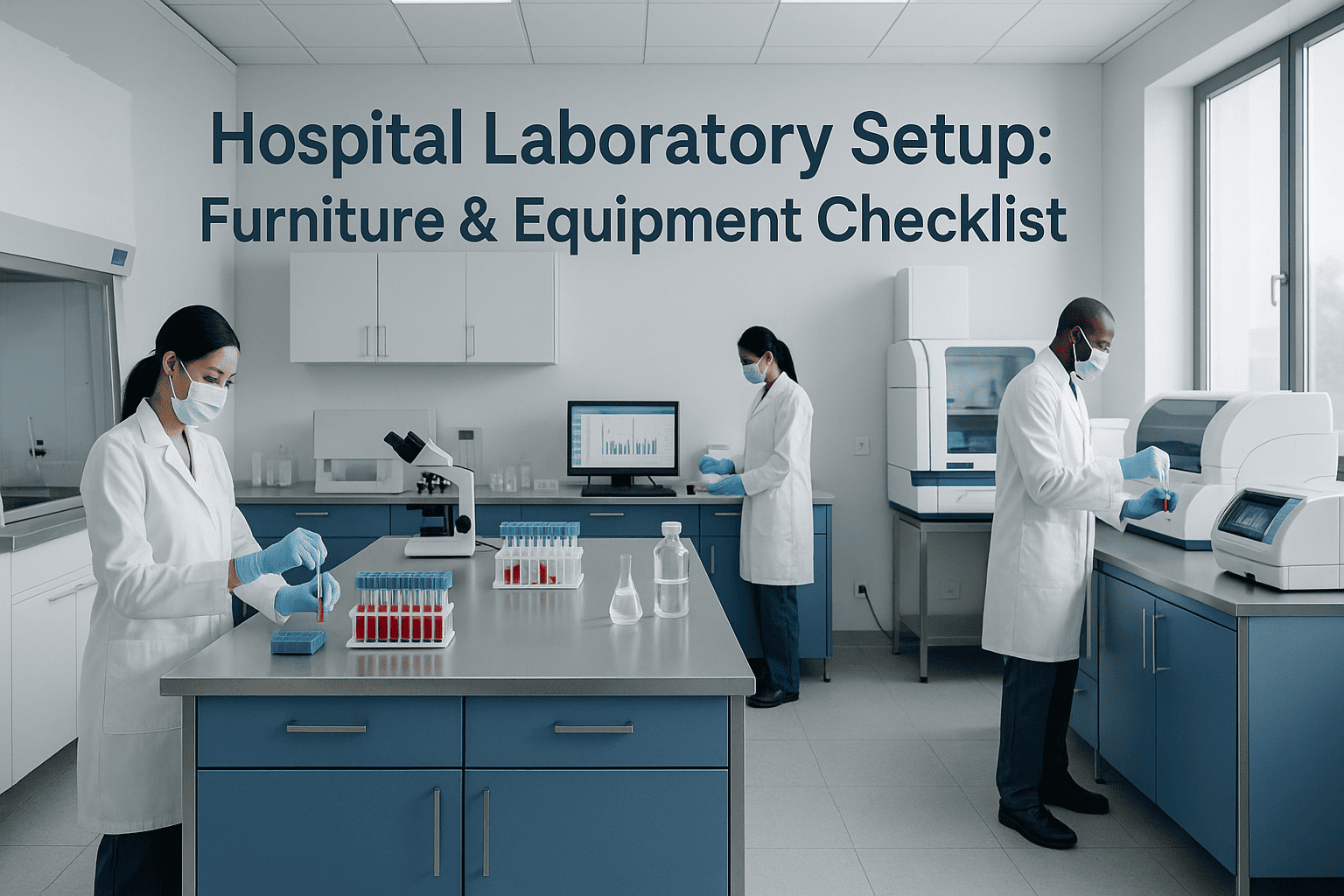
Setting up a Hospital Laboratory Setup requires careful planning, high-quality infrastructure, and precision in choosing the right furniture and instruments. A well-designed lab ensures safety, efficiency, and accuracy — all crucial for medical testing and diagnostics. Whether you are building a new hospital lab or upgrading an existing one, having a clear furniture and equipment checklist helps in achieving operational excellence.
In this article, we will explore the key components required for a hospital laboratory, including essential furniture, modern equipment, and layout considerations.
1- Planning and Designing the Laboratory Layout
The first step in any Hospital Laboratory Setup is a detailed layout plan. Proper design ensures smooth workflow, easy accessibility, and compliance with healthcare regulations. The layout should include separate zones for:
- Sample Collection Area – For receiving and labeling samples.
- Testing Zone – Equipped with analyzers and diagnostic instruments.
- Storage and Chemical Room – For keeping reagents, chemicals, and sensitive samples.
- Waste Disposal Section – For proper segregation and disposal of biological and chemical waste.
Modern hospital labs use modular designs that support flexibility, scalability, and hygiene. The furniture and equipment should be ergonomically designed, corrosion-resistant, and easy to clean.
2- Essential Hospital Laboratory Furniture
Selecting the right Hospital Laboratory Furniture is critical for maintaining efficiency and safety. The furniture should be made from durable materials such as stainless steel, powder-coated metal, or epoxy-coated surfaces to resist chemical reactions.
Here’s a list of essential furniture items:
a) Laboratory Workbenches
Workbenches are the foundation of every lab. Choose modular benches with durable tops such as granite, epoxy resin, or phenolic resin. They should include drawers and storage cabinets for tools and documents.
b) Storage Cabinets
Different cabinets are needed for general storage, reagent storage, and flammable materials. Ventilated cabinets ensure safe storage of chemicals and samples.
c) Fume Hoods and Biosafety Cabinets
Fume hoods prevent exposure to hazardous fumes, while biosafety cabinets ensure sterile environments for microbiological work.
d) Sink Units and Wash Areas
Every lab must have sinks with proper drainage and water connections to clean glassware and dispose of non-hazardous liquids safely.
e) Laboratory Chairs and Stools
Ergonomic seating is essential for technicians who spend long hours at the workstation. Adjustable height and back support are preferred features.
f) Instrument Tables
Separate tables for sensitive equipment like microscopes, centrifuges, and analyzers help reduce vibration and improve accuracy.
g) File and Document Storage
Proper documentation is crucial in hospital labs. File cabinets and shelving units help maintain order and record management.
3- Essential Hospital Laboratory Equipment
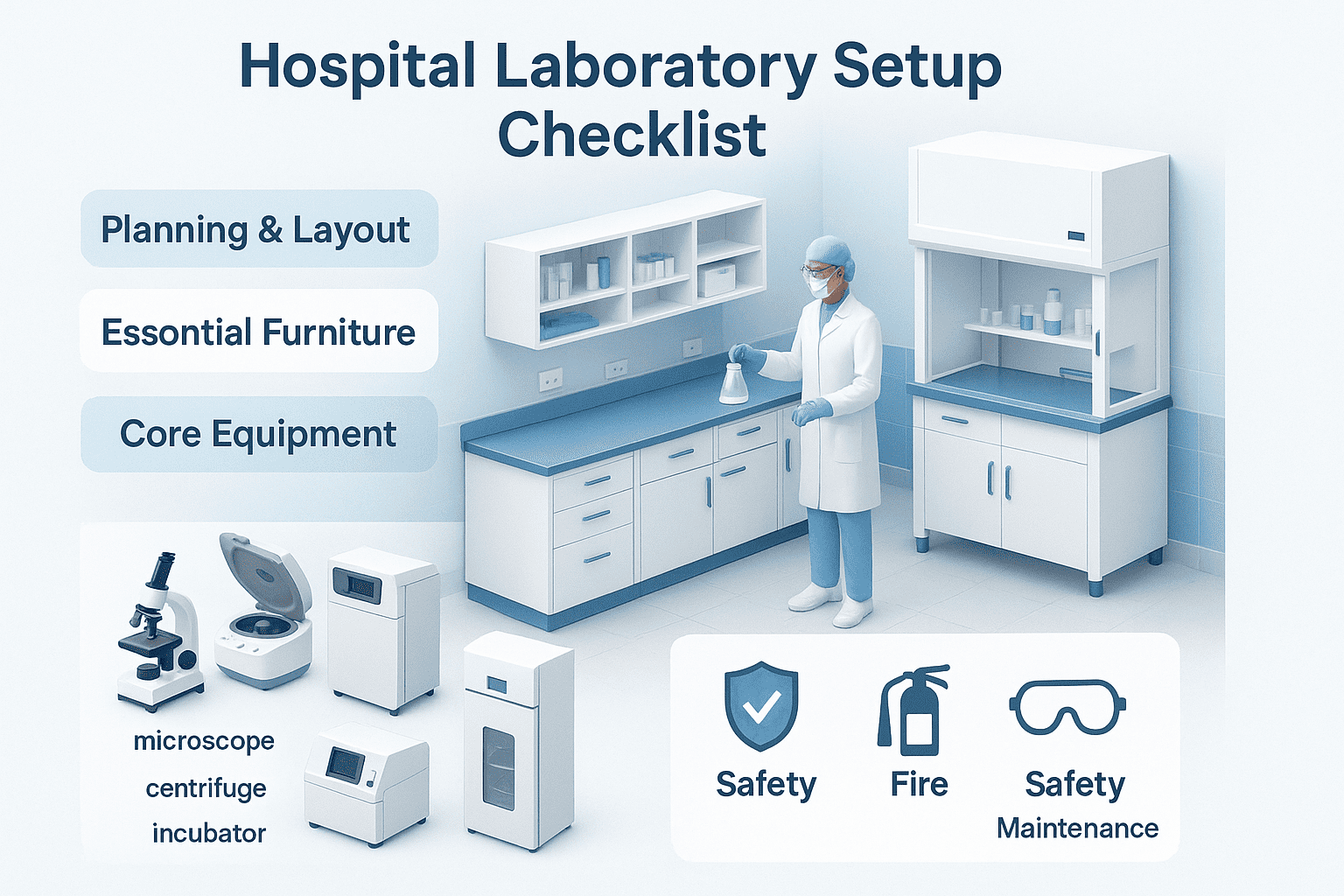
The right Hospital Laboratory Equipment enhances the quality and speed of medical testing. Depending on the type of hospital and the range of diagnostic services offered, the equipment list can vary. However, the following items are essential for most labs:
a) Analytical Instruments
- Biochemistry Analyzer: For testing blood glucose, liver enzymes, and other biochemical parameters.
- Hematology Analyzer: For complete blood count (CBC) and related tests.
- Electrolyte Analyzer: Measures ions like sodium, potassium, and chloride.
- Immunoassay Analyzer: For hormone and antibody testing.
b) Microscopes
High-resolution microscopes are vital for pathology, microbiology, and cytology labs. Choose digital or binocular microscopes based on application.
c) Centrifuges
Used for separating blood components, centrifuges come in different types such as refrigerated or high-speed models.
d) Incubators and Ovens
Microbiology and pathology labs require incubators for culture growth and ovens for sterilization.
e) Refrigerators and Freezers
For storing reagents, blood samples, and vaccines at controlled temperatures.
f) Autoclaves and Sterilizers
Essential for sterilizing instruments and maintaining hygiene standards.
g) Water Purification Systems
Pure water is critical for laboratory tests. Choose RO or deionization systems for consistent water quality.
h) Weighing Balances
Analytical balances ensure precision in sample preparation and reagent mixing.
i) Diagnostic Kits and Accessories
These include test tubes, pipettes, cuvettes, and reagents used in daily testing.
4- Safety and Compliance Essentials
Safety is non-negotiable in hospital laboratories. Compliance with NABL, ISO, and NABH standards ensures the lab operates safely and efficiently.
Essential safety equipment includes:
- Fire extinguishers and alarms
- Eye wash stations and emergency showers
- First aid kits
- Spill containment kits
- Proper ventilation systems
Personal protective equipment (PPE) such as gloves, lab coats, masks, and face shields must be available for all staff.
5- Modern Trends in Hospital Laboratory Design
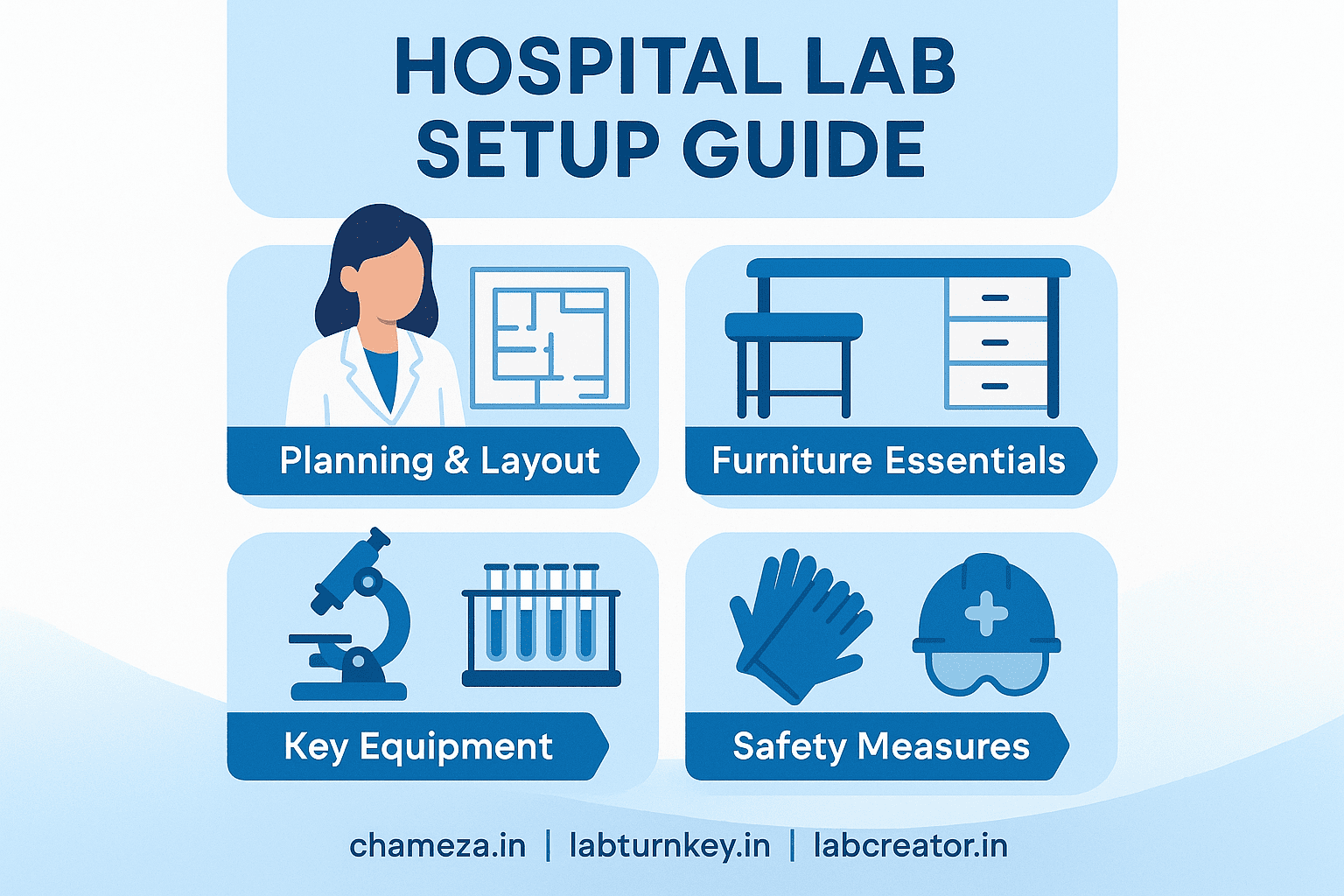
Modern hospital labs are evolving with smart technologies and sustainable designs. Some of the current trends include:
- Automation: Robotic sample handling systems to increase accuracy and speed.
- IoT Integration: Real-time monitoring of instruments and temperature-controlled storage.
- Energy-Efficient Equipment: Reduces operational costs and supports green initiatives.
- Modular Furniture Systems: Easy to reconfigure for future expansions.
- Digital Record Management: Cloud-based data storage for easy access and compliance.
Websites such as chameza.in, labturnkey.in, and labcreator.in provide advanced laboratory solutions that include modular furniture, design layouts, and complete turnkey project assistance.
6- Maintenance and Quality Control
A well-structured hospital laboratory setup demands regular maintenance and calibration. Scheduled servicing of analyzers, checking reagent expiry, and maintaining equipment logs are essential for smooth operations.
Routine cleaning, sterilization, and waste management procedures help maintain hygiene and prevent contamination. Continuous staff training ensures adherence to protocols and enhances performance.
7- Conclusion
A functional and efficient Hospital Laboratory Setup is the backbone of modern healthcare. By investing in high-quality Hospital Laboratory Furniture and reliable Hospital Laboratory Equipment, hospitals can ensure accuracy, safety, and productivity.
Working with trusted laboratory solution providers like chameza.in, labturnkey.in, and labcreator.in ensures professional design, quality installation, and long-term support. A well-equipped and organized lab not only improves diagnostic efficiency but also elevates patient trust and hospital reputation.
Leave a Reply