

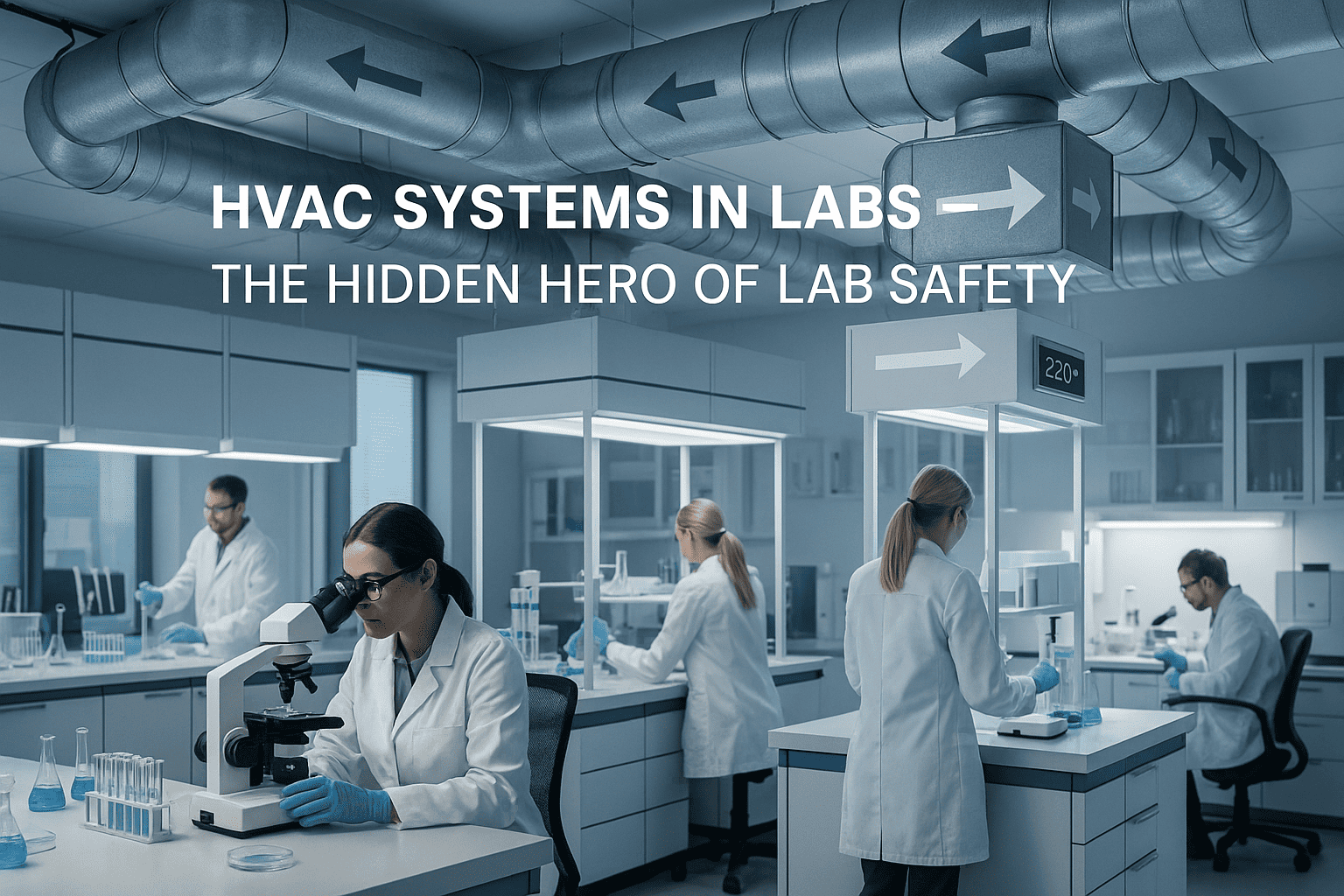
When we think of laboratory safety, the first things that come to mind are lab coats, safety goggles, or chemical fume hoods. However, behind the scenes, another crucial component silently ensures a safe and stable working environment — the HVAC Systems in Labs. These systems are the backbone of every laboratory, maintaining air quality, controlling temperature, and ensuring proper ventilation to protect both people and experiments.
In this article, we’ll explore how HVAC systems contribute to laboratory safety, the types of HVAC systems in lab, and key laboratory HVAC requirements that ensure efficiency and compliance.
1- Understanding the Role of HVAC Systems in Laboratory Safety
Laboratories are unique environments where chemical reactions, biological experiments, and sensitive analyses occur. Small fluctuations in temperature, humidity, or air quality can lead to inaccurate results, unsafe conditions, or contamination. This is where HVAC Systems in Labs play a vital role.
These systems go beyond simple air conditioning — they regulate airflow direction, maintain negative or positive pressure zones, and filter out harmful contaminants. The goal is to ensure that every part of the lab receives clean, conditioned air while keeping hazardous fumes or particles confined.
For instance, in microbiological laboratories, maintaining specific pressure levels prevents the spread of infectious agents. In chemical labs, constant air changes dilute and remove volatile vapors, reducing the risk of explosions or poisoning.
In short, the HVAC system acts as the invisible safety guard, protecting researchers, experiments, and the environment simultaneously.
2- Why HVAC Systems Are Called the “Hidden Heroes”
Unlike visible safety equipment, the HVAC system works quietly in the background. It doesn’t attract attention — yet without it, no laboratory could function safely or effectively.
Here’s why HVAC systems are considered the “hidden heroes” of lab safety:
- Air Quality Control: They maintain clean and filtered air, removing dust, fumes, and microorganisms.
- Temperature and Humidity Stability: Many experiments require precise environmental control to ensure accurate results.
- Cross-Contamination Prevention: Proper pressure balance ensures hazardous materials stay within their designated areas.
- Energy Efficiency: Modern systems use intelligent sensors to reduce energy waste while maintaining safety standards.
- Regulatory Compliance: They help laboratories meet ISO, NABL, and ASHRAE standards for ventilation and air quality.
When functioning properly, HVAC systems make laboratories safe, efficient, and compliant with international guidelines.
3- Different Types of HVAC Systems in Labs
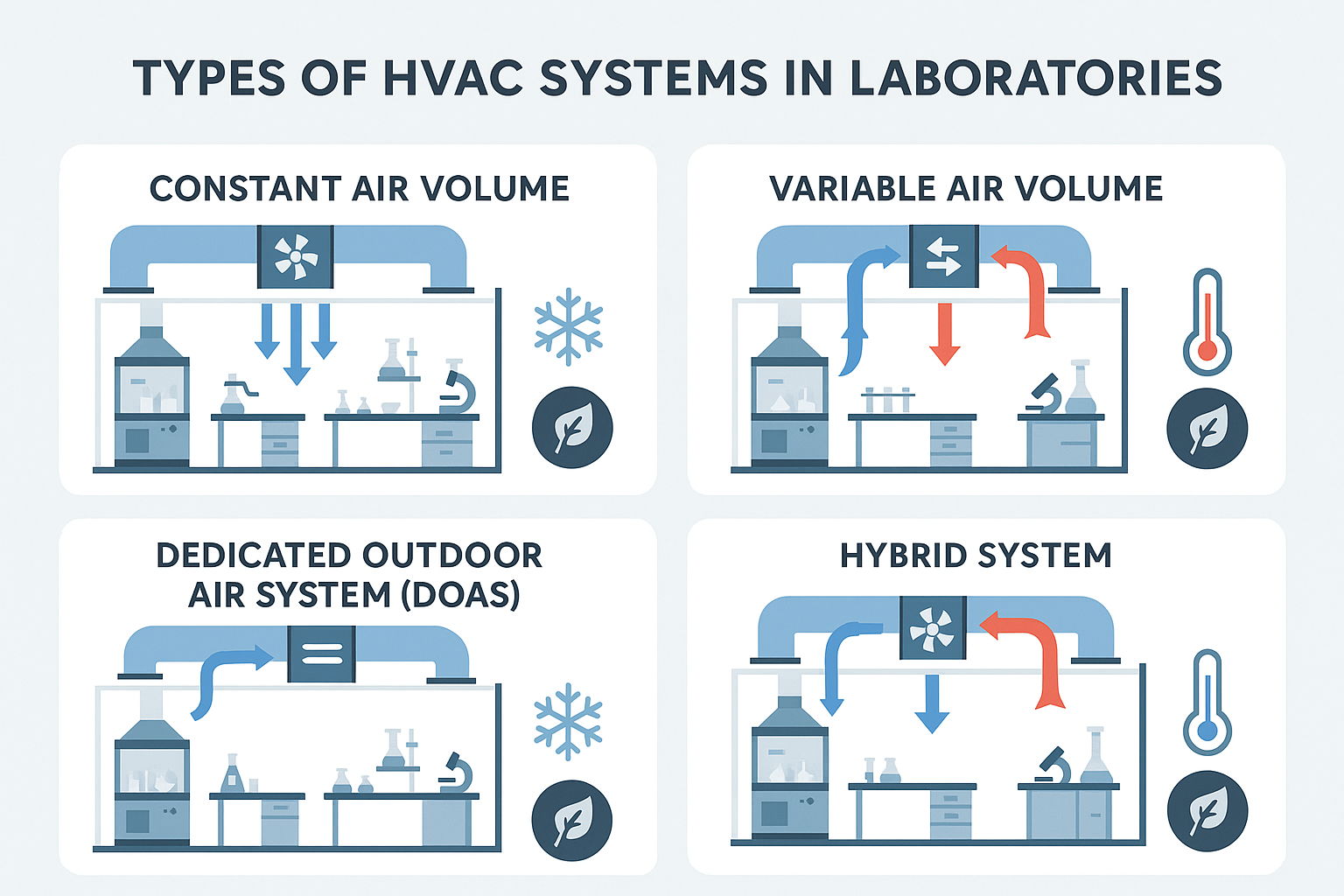
Choosing the right HVAC setup depends on the lab’s purpose, size, and safety requirements. There are several types of HVAC systems in lab, each designed for specific functions:
a) Constant Air Volume (CAV) Systems
These systems supply a constant volume of air while varying the temperature to maintain conditions. They are suitable for smaller or less variable lab environments. However, they consume more energy since airflow remains constant.
b) Variable Air Volume (VAV) Systems
VAV systems adjust both air volume and temperature based on occupancy or fume hood usage. They are more energy-efficient and commonly used in modern labs where flexibility and control are critical.
c) Dedicated Outdoor Air Systems (DOAS)
These systems bring in 100% fresh outdoor air, which is treated and distributed throughout the lab. DOAS is essential in high-containment laboratories (like BSL-3 and BSL-4) where contaminated air must never be recirculated.
d) Hybrid Systems
A combination of CAV and VAV, hybrid systems balance efficiency and safety. They are ideal for research facilities with mixed requirements — such as chemical and biological labs operating together.
Each type of system is selected based on laboratory function, chemical usage, and safety protocols. For example, a pharmaceutical lab may prefer a VAV system for flexibility, while a toxicology lab might opt for DOAS for complete isolation.
4- Key Laboratory HVAC Requirements
Designing an HVAC system for a laboratory isn’t as simple as installing an air conditioner. The system must meet specific laboratory HVAC requirements to ensure safety and reliability. Some key factors include:
a) Air Changes per Hour (ACH)
Labs typically require 6–12 air changes per hour to dilute contaminants. The exact rate depends on the type of experiments conducted.
b) Pressure Differentials
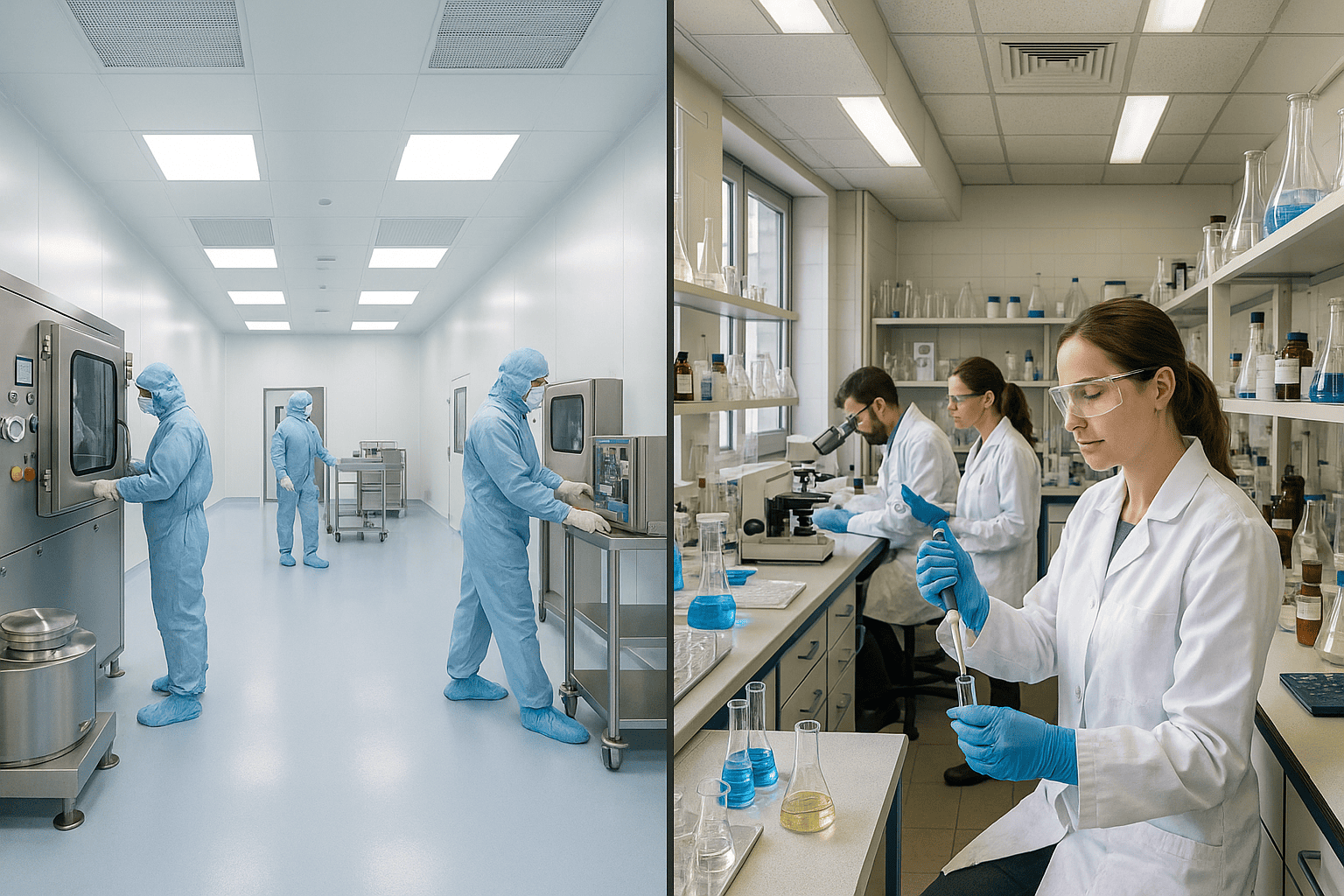
- Positive Pressure: Used in cleanrooms or sterile labs to prevent contamination from entering.
- Negative Pressure: Used in chemical or biosafety labs to contain hazardous substances.
c) Filtration Standards
HEPA (High-Efficiency Particulate Air) filters are commonly used to remove 99.97% of airborne particles. For chemical labs, activated carbon filters are added to capture fumes and vapors.
d) Temperature and Humidity Control
Precision is key. Most laboratories maintain a temperature between 20°C–24°C and relative humidity between 30%–50%.
e) Exhaust and Fume Hood Integration
All fume hoods must be connected to exhaust systems that remove hazardous gases safely. Proper balancing ensures that fumes are not recirculated into the workspace.
Meeting these requirements ensures that the lab operates safely, efficiently, and within compliance standards.
5- Energy Efficiency and Smart Controls
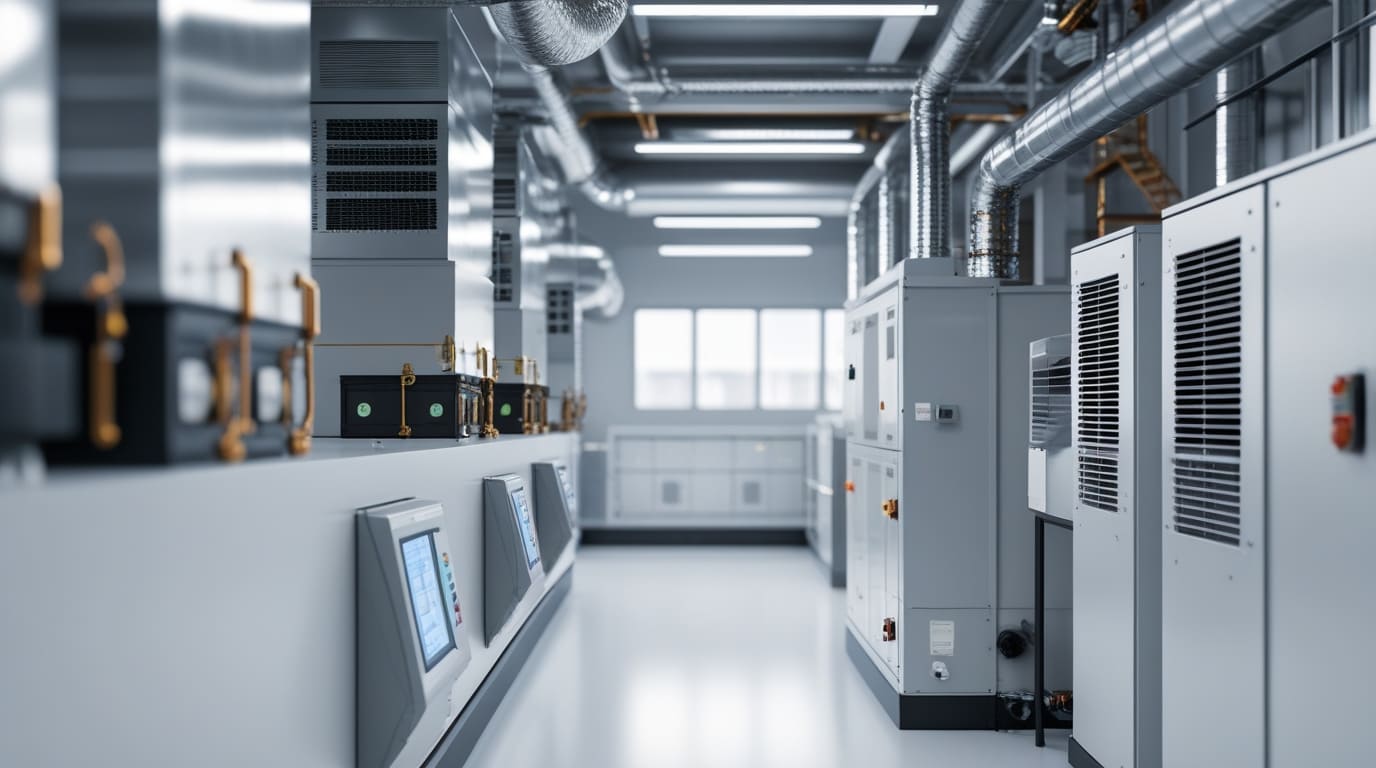
Modern laboratory HVAC systems integrate smart technology to optimize energy use. Since labs consume up to 5 times more energy than typical office buildings, efficiency is a major focus.
Smart sensors can automatically adjust airflow based on occupancy or fume hood activity. For instance, when no one is present, airflow can be reduced to save energy while maintaining minimum safety standards.
These advancements not only lower operational costs but also support sustainability goals — a growing priority for research organizations worldwide.
6- Challenges in Laboratory HVAC Design
Designing an HVAC system for a laboratory involves several challenges:
- Maintaining stability despite frequent air changes.
- Preventing cross-contamination in multi-zone facilities.
- Balancing energy savings with strict safety standards.
- Ensuring flexibility for future lab modifications.
Therefore, it’s essential to partner with experienced professionals who understand both engineering and laboratory safety requirements.
7- Trusted Partners for Laboratory HVAC Solutions
If you’re planning to design or upgrade a laboratory, choosing the right partner for HVAC and lab infrastructure is crucial. Reliable companies in India like:
- chameza.in – Experts in turnkey laboratory solutions and safety systems.
- labturnkey.in – Specializes in lab design, modular furniture, and HVAC systems.
- labcreator.in – Offers complete laboratory setup services with energy-efficient HVAC integration.
These companies have extensive experience in delivering safe, compliant, and high-performance laboratory environments tailored to research and industrial needs.
8- Conclusion
The next time you walk into a well-ventilated, comfortable, and odor-free laboratory, remember that it’s not just the fume hood or safety gear keeping you safe — it’s the unseen HVAC system working tirelessly in the background.
The HVAC Systems in Labs are truly the hidden heroes of laboratory safety. From maintaining air purity and temperature to ensuring proper ventilation and compliance, they form the foundation of every safe research environment.
By understanding the types of HVAC systems in lab and implementing proper laboratory HVAC requirements, you can ensure your laboratory operates safely, efficiently, and sustainably for years to come.
Leave a Reply