

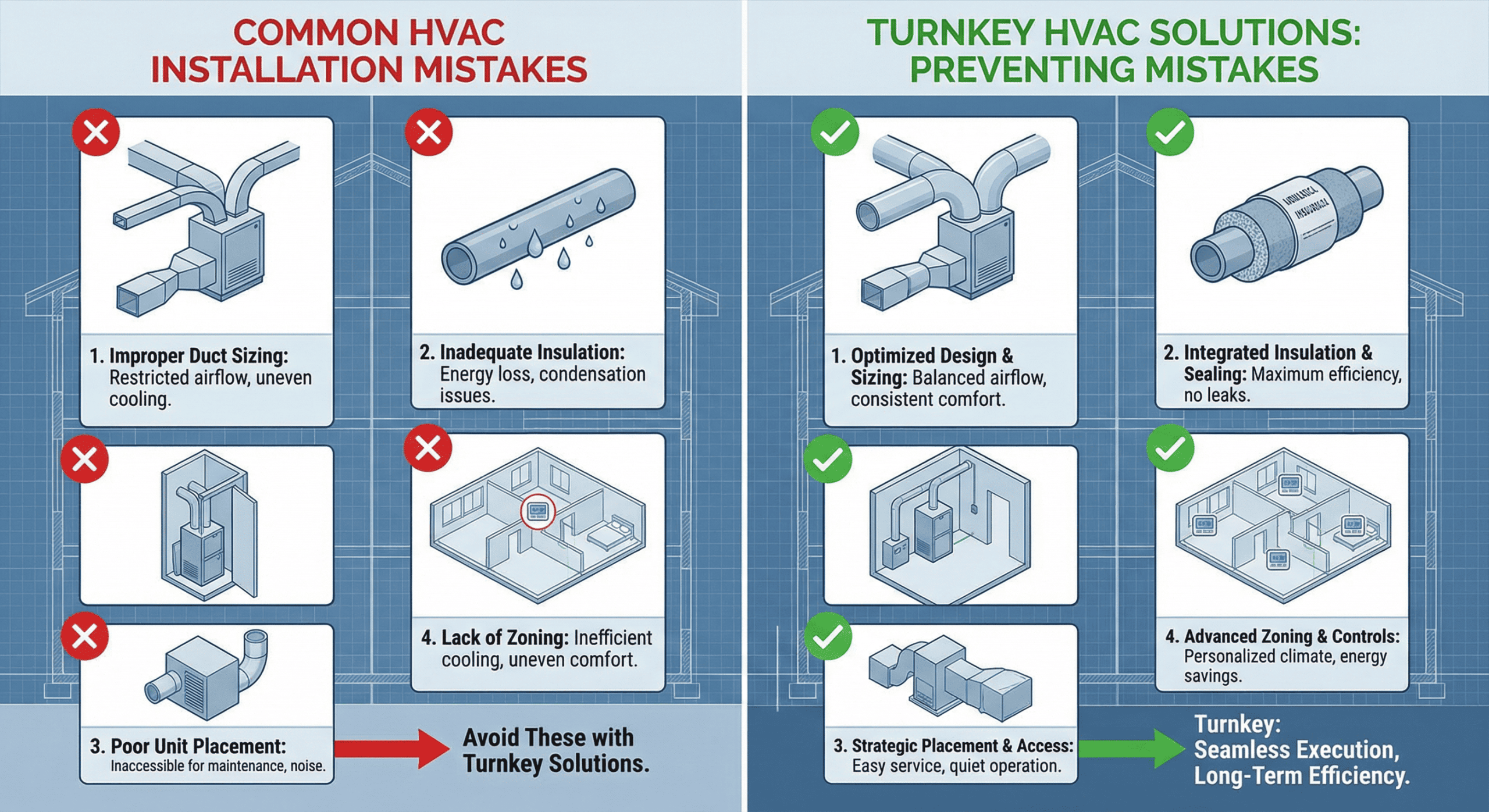
A well-designed Heating, Ventilation, and Air Conditioning (HVAC) system is the backbone of comfort, indoor air quality, and energy efficiency in any new building. Yet, many construction projects fail to achieve optimal performance due to common HVAC installation mistakes that occur during planning, installation, or commissioning. These errors not only increase long-term operational costs but also reduce the overall lifespan of HVAC assets.
This is where turnkey HVAC benefits come into play. Turnkey solutions ensure seamless system design, execution, testing, and handover—all handled by a single expert provider. This approach eliminates gaps, miscommunication, and technical errors that commonly occur in multi-vendor setups.
In this article, we explore the most frequent HVAC problems seen in new constructions and how a turnkey method ensures HVAC quality assurance from start to finish.
1- Poor or Incorrect HVAC Design
One of the most significant issues in new buildings is incorrect HVAC design. Design errors usually stem from improper load calculations, lack of consideration for building orientation, insulation levels, occupancy patterns, and future expansion needs.
Poor design results in:
- Oversized or undersized equipment
- Uneven airflow distribution
- Unnecessary energy consumption
- Higher maintenance and repair costs
Turnkey providers eliminate this risk by following meticulous design protocols. They use advanced simulation tools, industry-approved load calculation standards, and engineering best practices. With a single point of responsibility, there is no mismatch between design drawings and actual site requirements.
2- Inadequate Ductwork Planning and Installation
Ductwork plays a critical role in system efficiency, but mistakes often occur due to rushed coordination between architects, contractors, and HVAC teams. Common HVAC installation mistakes in ductwork include:
- Sharp turns that restrict airflow
- Poor sealing leading to air leakage
- Incorrect duct sizing
- Low-quality insulation that causes temperature losses
A turnkey team ensures that ductwork is designed, fabricated, and installed with precision. They conduct pre-installation inspections, onsite measurements, and airflow tests to verify that the entire network supports optimum system performance.
3- Wrong Equipment Selection
Choosing the wrong capacity or type of HVAC equipment is one of the biggest issues in new buildings. This generally happens when multiple contractors work independently without a unified plan.
Incorrect sizing results in:
- Short cycling
- Excessive energy use
- Rapid equipment wear
- Poor humidity control
Turnkey teams handle equipment selection based on the building’s real-world needs. They select the right combination of chillers, AHUs, VRF/VRV systems, exhaust systems, and ventilation equipment—ensuring performance, reliability, and long-term savings.
4- Lack of Proper Ventilation Planning
Many new buildings focus solely on temperature control while overlooking ventilation standards. Poor ventilation leads to indoor air pollution, odor problems, and increased CO₂ levels.
Turnkey HVAC experts integrate ventilation into the early design phase, ensuring compliance with ASHRAE and national codes. They balance fresh air intake with exhaust systems to maintain healthy indoor environments.
5- Poor Drainage and Condensate Management
One of the most common HVAC troubleshooting issues in new buildings is improper condensate drain line installation. This results in:
- Water leakage
- Mold growth
- Damage to ceilings and walls
- System breakdowns
Turnkey teams follow structured installation standards and ensure that all drain lines have proper slopes, insulation, and access points for maintenance.
6- Electrical and Control System Errors
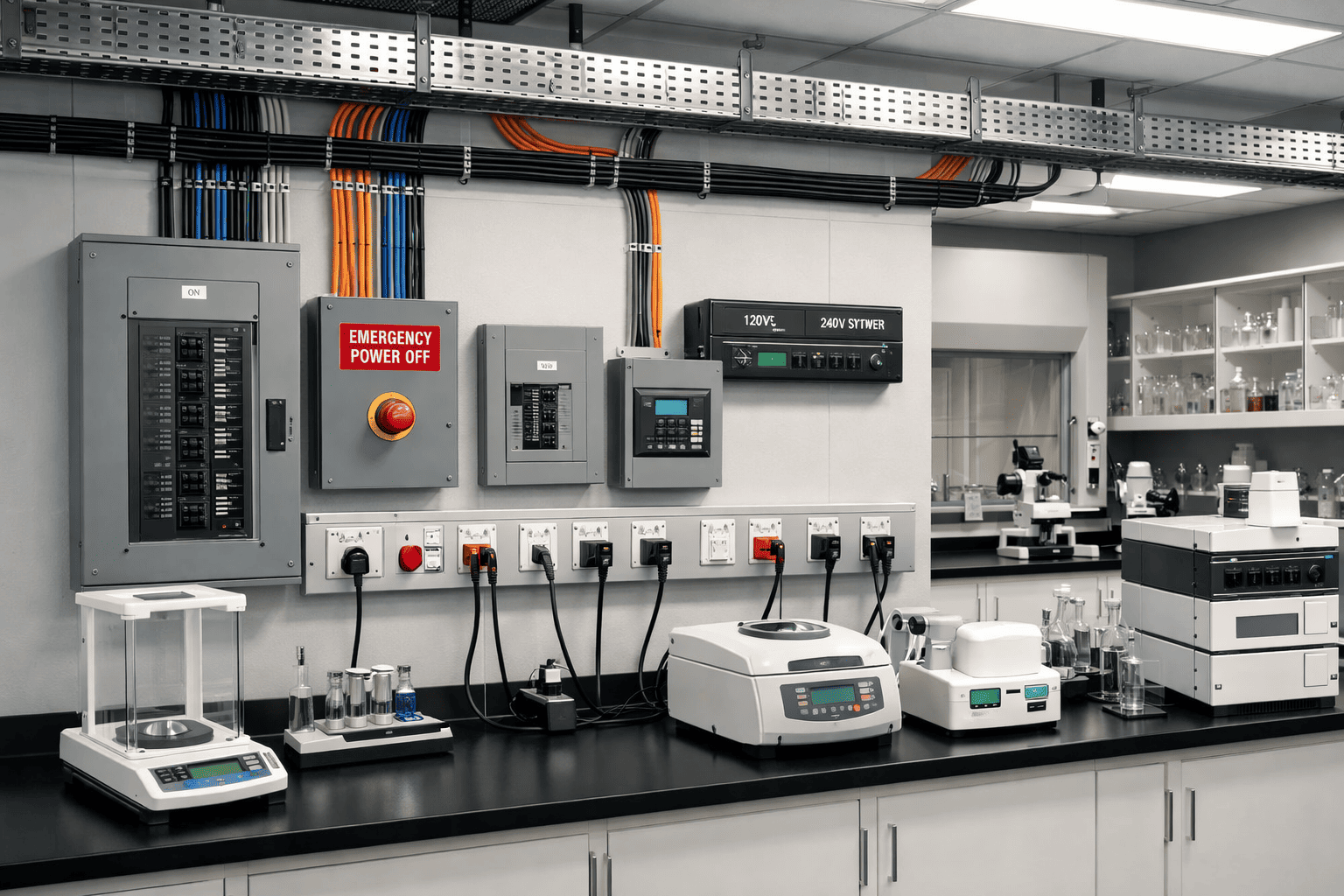
Another frequent problem occurs when different teams handle electrical work, control wiring, and automation. Even a minor error in wiring, sensor placement, or controller programming can lead to major operational failures.
Turnkey providers integrate electrical panels, BMS controls, and automation systems into the HVAC design. They conduct end-to-end testing to ensure all components communicate correctly and operate seamlessly.
7- Lack of Commissioning and Performance Testing
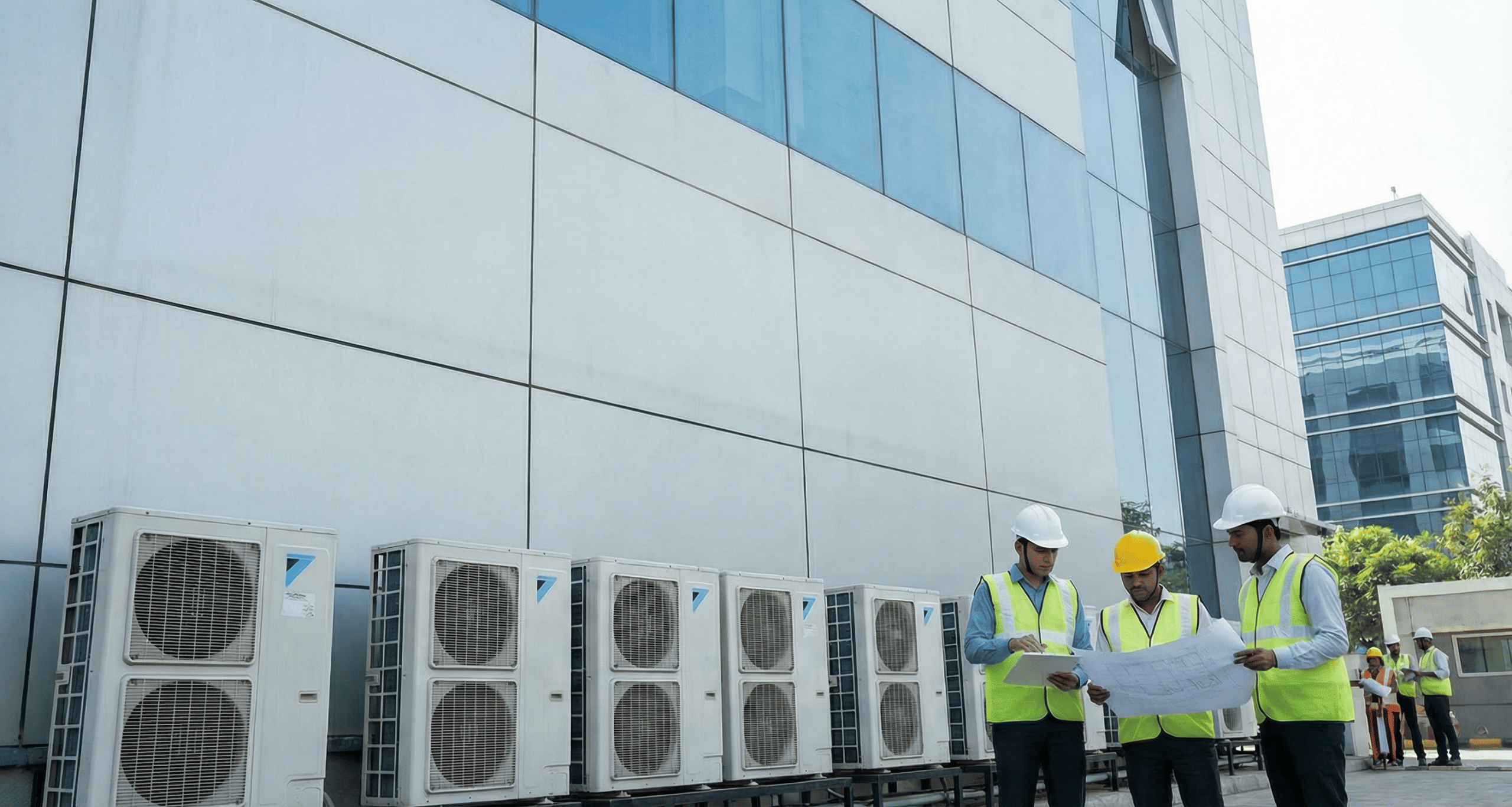
Many buildings face HVAC issues right after occupancy due to inadequate system testing. Delayed commissioning or skipped performance checks can cause:
- Temperature imbalance
- High operating costs
- Frequent equipment breakdowns
- Complaints from occupants
A turnkey solution ensures structured commissioning, including:
- Air balancing
- Water balancing
- Control system calibration
- Safety checks
- Performance benchmarking
This guarantees that the system functions exactly as intended before handover.
8- Minimal Focus on Maintenance Planning
A common reason for early system failure is the lack of a proper maintenance plan. Most new building projects stop once installation is complete, leaving the facility team unprepared.
Turnkey HVAC teams provide:
- Comprehensive operation manuals
- Maintenance schedules
- Training for facility managers
- Long-term AMCs (Annual Maintenance Contracts)
This ensures uninterrupted operation, longer equipment life, and reduced repair costs.
How Turnkey Solutions Prevent All Major HVAC Mistakes
A turnkey approach integrates correct HVAC design, installation, commissioning, and maintenance into one unified service. This high-level coordination ensures the highest HVAC quality assurance while reducing delays and technical errors.
Key advantages of turnkey HVAC benefits include:
- A single expert team handles the entire project
- Zero conflicts between contractors
- Faster project execution
- Guaranteed equipment compatibility
- Cost-effective procurement
- Smooth installation and commissioning
- Better long-term system performance
Turnkey providers follow a structured workflow—from design and procurement to installation and testing—resulting in a fully optimized HVAC system.
Conclusion
HVAC systems are one of the most crucial elements of any modern building. However, common HVAC installation mistakes such as incorrect sizing, poor duct design, bad ventilation, and inadequate commissioning can severely impact performance and cost efficiency. By adopting a turnkey approach, developers and building owners can avoid these challenges entirely.
Turnkey solutions ensure correct HVAC design, precise installation, reliable system performance, and long-term HVAC quality assurance. With a single point of responsibility and a streamlined process, turnkey methods offer superior HVAC troubleshooting, reliability, and value.
Ultimately, investing in a turnkey HVAC partner is the smartest way to guarantee comfort, efficiency, and operational safety in any new building.




Leave a Reply