

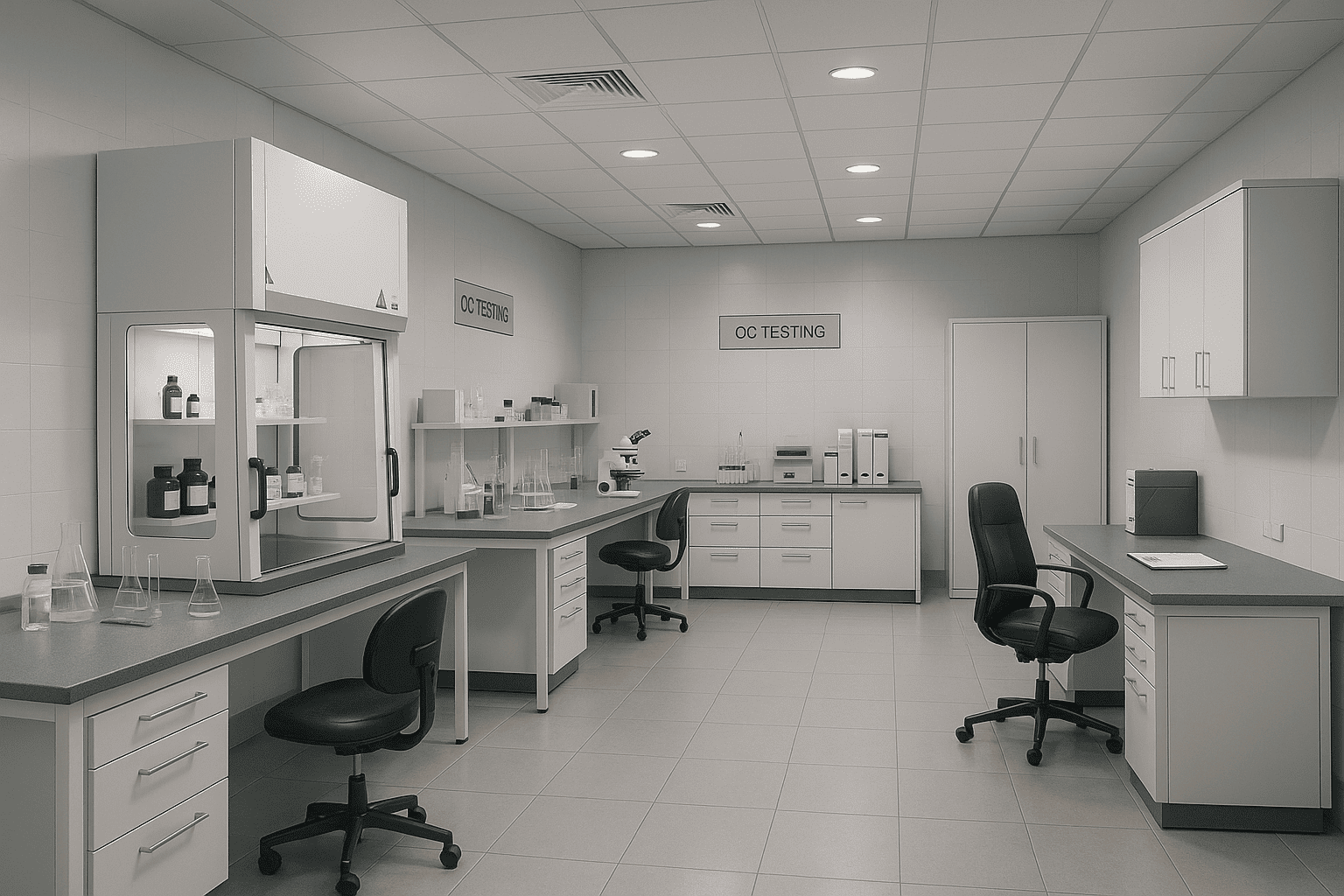
Pharmaceutical Quality Control (QC) labs sit at the heart of drug safety. Every batch approval, every stability test, every compliance report depends on how well these labs are designed. A poorly planned QC lab slows work, increases contamination risk, and creates audit headaches. A well-designed one does the opposite it supports accuracy, efficiency, and compliance without getting in the way.
This guide breaks down what actually matters when Designing High-Performance Pharmaceutical QC Labs, with a sharp focus on furniture, layout planning, and HVAC systems. These aren’t isolated elements. They work together, and when they’re aligned, the lab performs better—day after day.
Understanding the Role of Pharmaceutical QC Labs
Before getting into design specifics, it’s important to understand how QC labs function. These labs handle raw material testing, in-process checks, finished product analysis, and stability studies. Precision is non-negotiable. Environmental control, workflow discipline, and contamination prevention are basic requirements, not nice-to-haves.
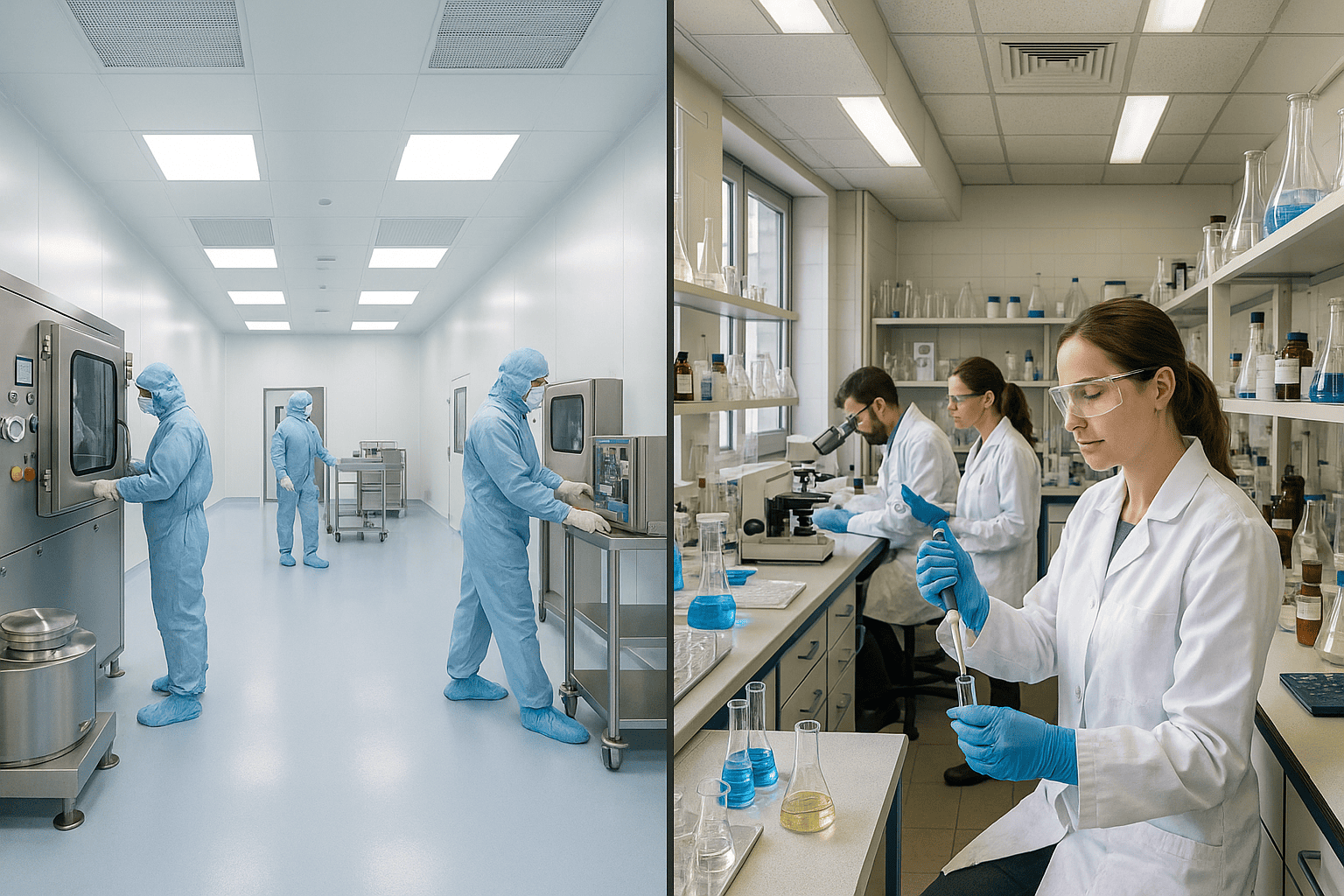
That’s why Pharmaceutical QC Labs demand a higher standard of planning than general laboratories. The design must support GMP, GLP, WHO, and regulatory audits while remaining flexible enough to handle changing test protocols and instruments.
Smart Layout Planning: Flow Comes First
Layout is the backbone of any QC lab. If the flow is wrong, no amount of good furniture or HVAC tuning will fix it.
1- Zoning Based on Function
Start by dividing the lab into clearly defined zones:
- Sample receiving and logging
- Wet chemistry
- Instrumentation (HPLC, GC, UV, etc.)
- Microbiology (if applicable)
- Stability chambers
- Documentation and data review areas
Each zone should have a logical progression that minimizes cross-movement. Samples should move forward, not backtrack. Analysts shouldn’t have to cross high-traffic paths to reach instruments.
2- Personnel and Material Flow
Design separate movement paths wherever possible:
- Personnel entry with gowning
- Sample movement corridors
- Waste exit routes
This reduces contamination risk and keeps audits clean. When inspectors walk through, clear flow patterns signal control and intent.
3- Space for Growth
One common mistake is designing for today’s equipment only. QC labs evolve. New instruments come in, test volumes increase, regulations tighten. Leave buffer space especially in instrument rooms and service corridors to avoid expensive redesigns later.
Laboratory Furniture: Built for Precision and Durability
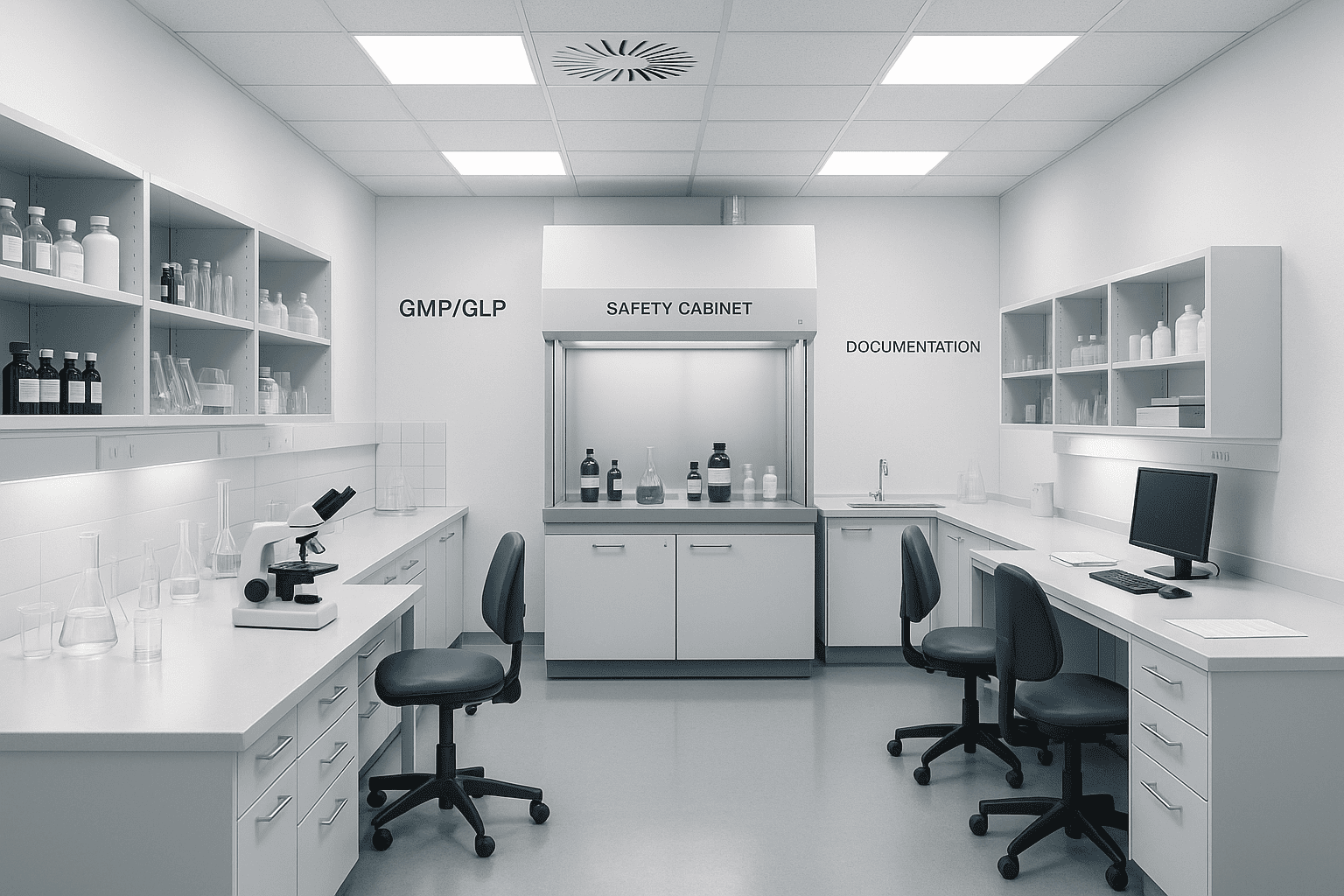
Furniture isn’t just about storage or aesthetics. In QC labs, furniture directly affects safety, workflow, and compliance. Choosing the wrong material or configuration can create vibration issues, chemical damage, or cleaning problems.
- Material Selection Matters
For Designing Labs Furniture, chemical resistance and cleanability come first.
Common choices include:
- Epoxy resin worktops for wet chemistry
- Phenolic resin for general testing areas
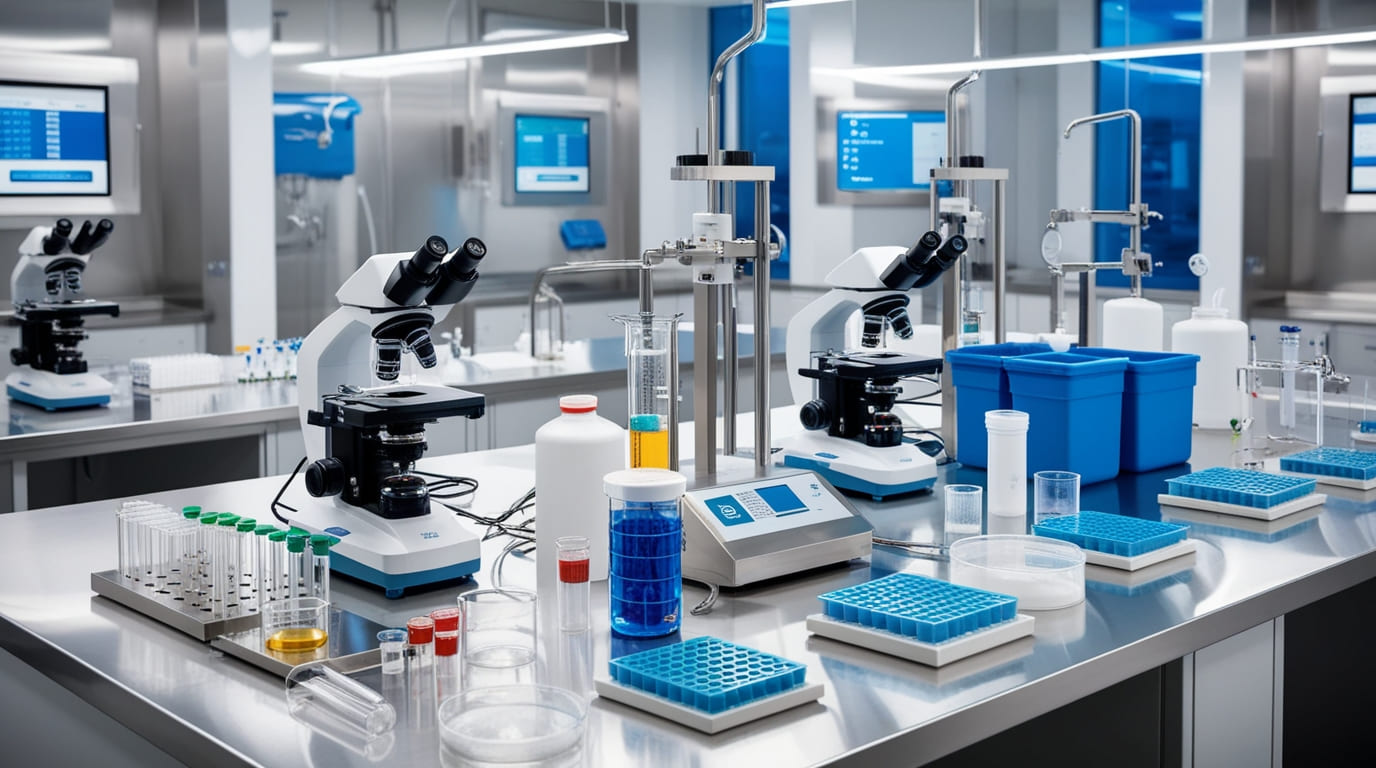
- Stainless steel for microbiology and wash zones
Avoid porous materials. Every surface should withstand solvents, acids, and frequent cleaning without degrading.
- Modular and Flexible Design
Fixed furniture locks you into one way of working. Modular lab furniture allows reconfiguration when equipment or workflows change. Adjustable shelves, movable base units, and modular benching systems give you flexibility without compromising stability.
This is especially useful in Pharmaceutical QC Labs, where test methods and regulatory requirements evolve over time.
- Ergonomics and Analyst Comfort
QC analysts spend long hours at benches and instruments. Poor ergonomics leads to fatigue and errors.
Design considerations include:
- Proper bench heights
- Footrests for standing work
- Adequate knee clearance
- Task lighting at benches
Comfort isn’t a luxury. It directly impacts accuracy and productivity.
Storage and Utilities: Often Overlooked, Always Critical
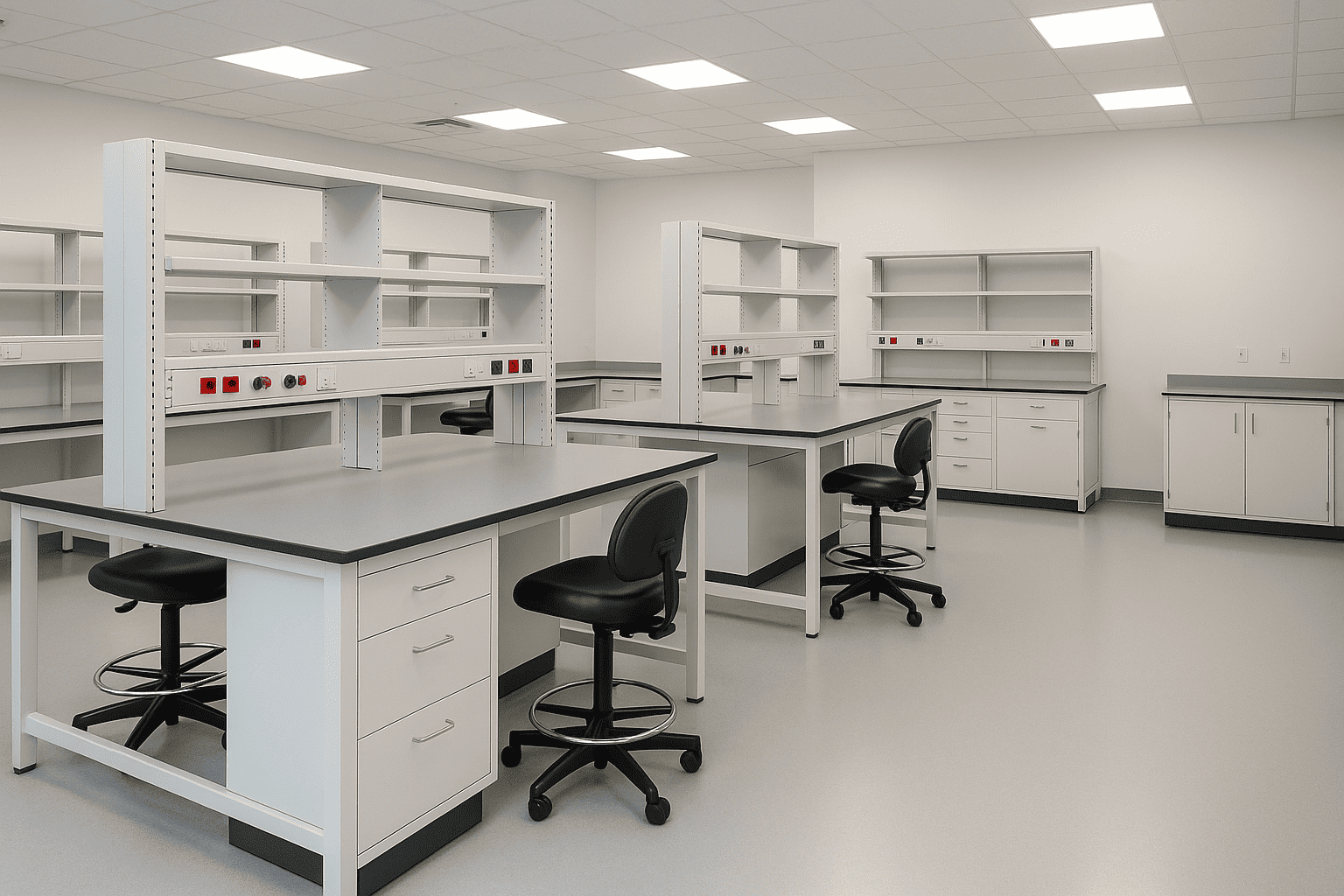
Good labs hide complexity behind smart storage and utility planning.
- Chemical Storage
Store chemicals based on compatibility, not convenience. Dedicated cabinets for acids, flammables, and solvents are essential. Place them close to points of use—but never under worktops handling heat or electrical equipment.
- Utility Integration
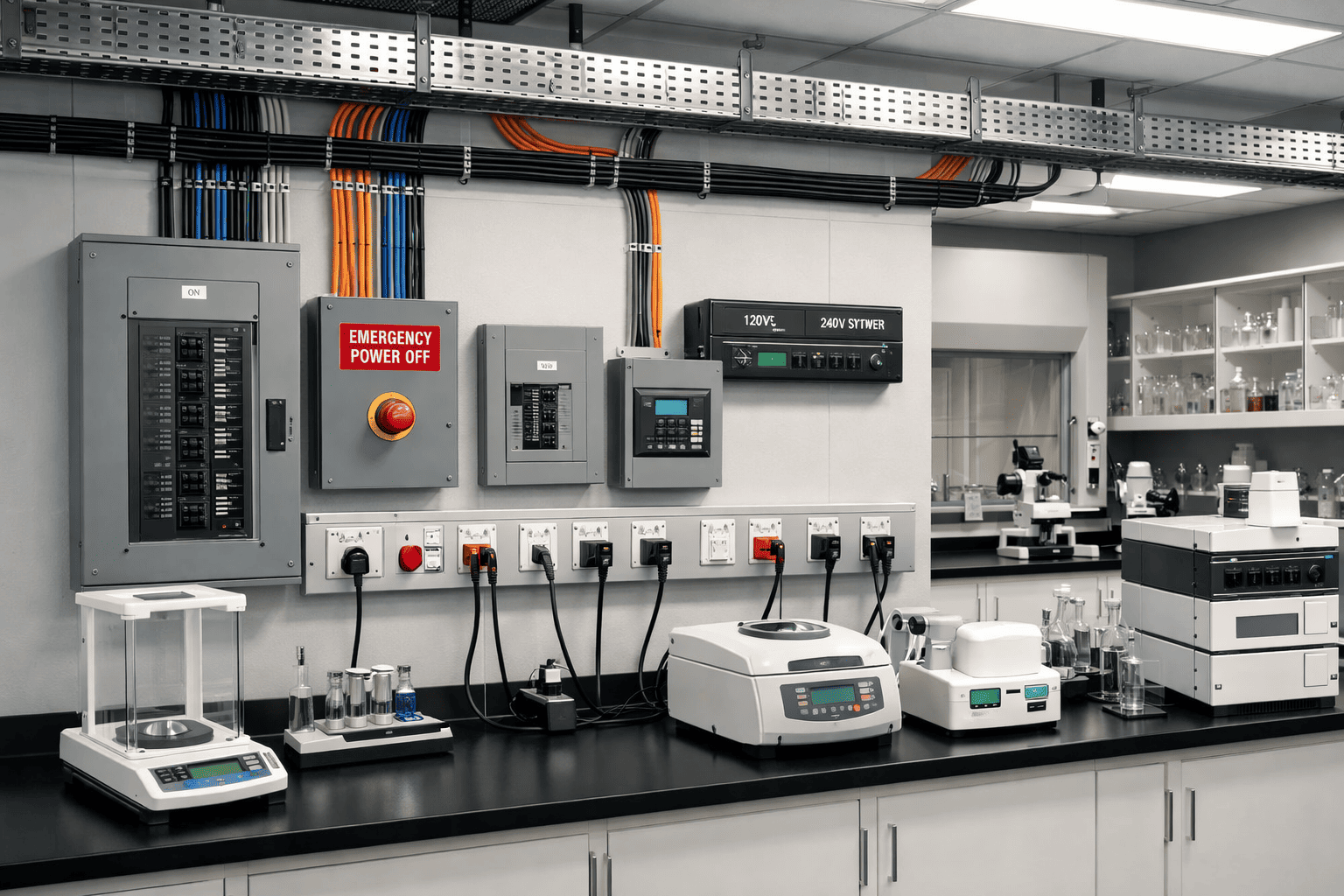
Gas lines, electrical points, data ports, and vacuum lines should be integrated into furniture or service spines. Exposed cables and temporary extensions are red flags during audits.
Plan utilities early, not after furniture installation. Retrofitting almost always costs more and looks worse.
HVAC Tips: Controlling the Invisible Variables
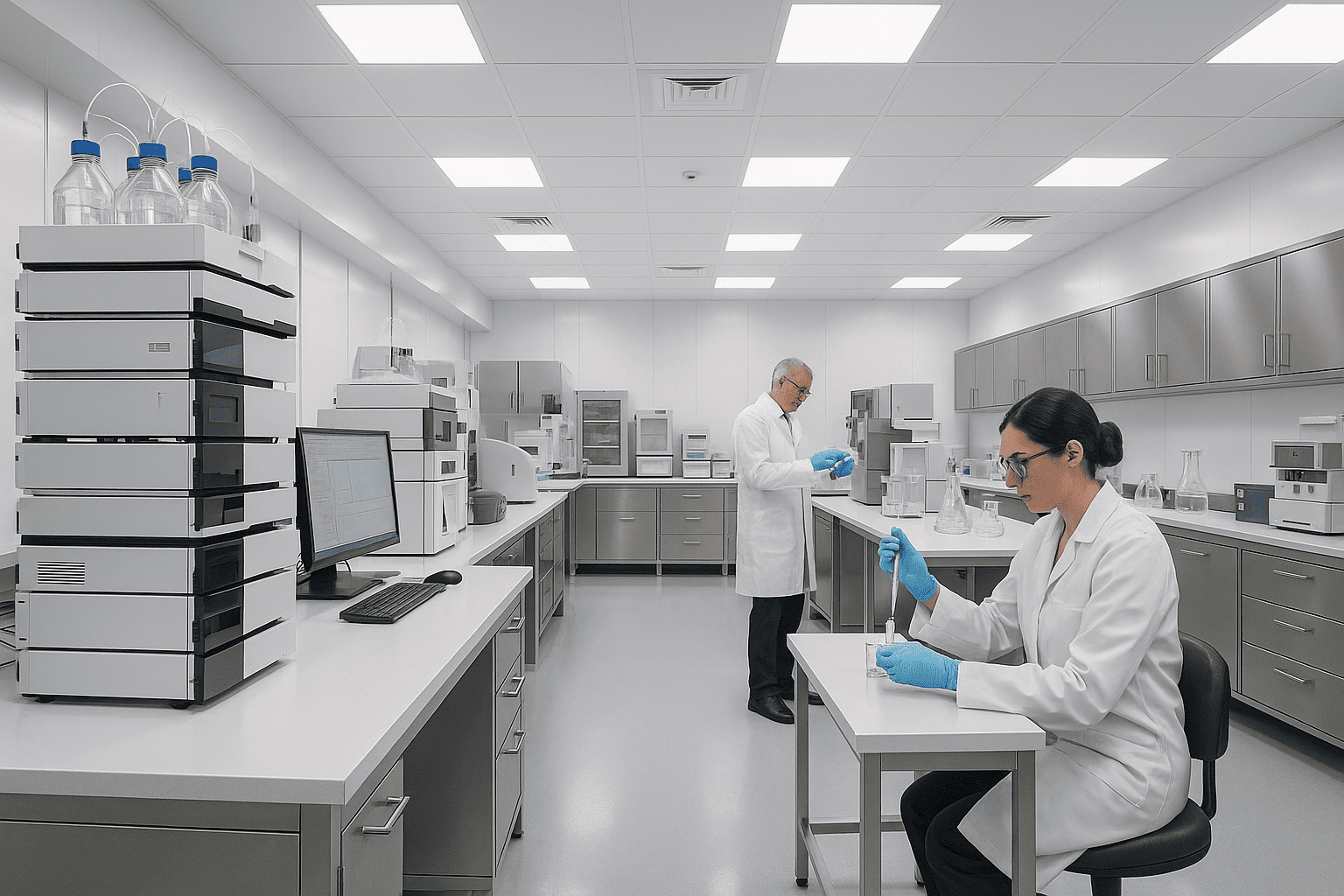
HVAC is where many QC labs fail quietly. The room looks fine, the furniture is perfect—but temperature, humidity, and air pressure drift just enough to affect results.
Strong HVAC Tips are essential for consistent performance.
- Temperature and Humidity Control
Most QC labs require tight temperature control, often ±2°C, and controlled humidity—especially for stability testing and sensitive instruments.
Design HVAC systems with:
- Dedicated AHUs for QC areas
- Zonal control for different lab rooms
- Continuous monitoring and alarms
Shared HVAC systems with offices or production areas are risky and often non-compliant.
- Air Changes and Cleanliness
Adequate air changes per hour (ACH) help remove fumes, control particulates, and maintain a safe working environment. The required ACH depends on the type of testing performed, but under-designing airflow is a common mistake.
Use HEPA filtration where needed, especially in microbiology or high-sensitivity zones.
- Pressure Differentials
Pressure control helps contain contaminants and protect samples. Positive pressure keeps contaminants out of clean areas. Negative pressure contains hazardous fumes or microbiological risks.
Pressure cascades should follow the lab’s zoning logic—not fight it.
Integrating Design for Compliance and Audits
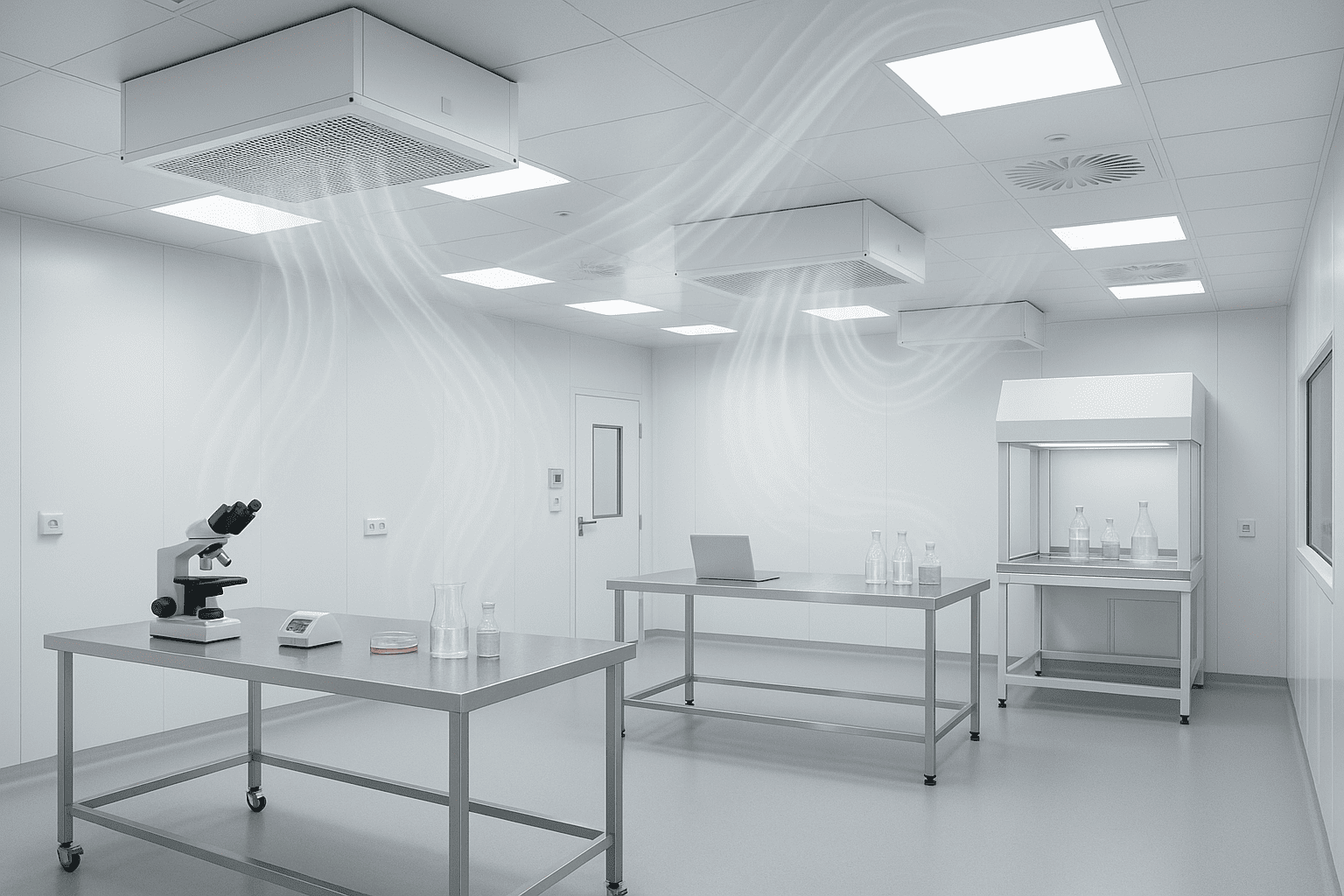
Regulatory audits don’t just review SOPs—they look at physical design. Inspectors notice:
- Clear segregation of activities
- Clean, damage-free furniture
- Logical airflow and pressure control
- Safe chemical storage
- Proper waste handling routes
When Designing High-Performance Pharmaceutical QC Labs, compliance should be built into the structure—not added later through procedures and signage.
Final Thoughts: Design as a Long-Term Investment
A pharmaceutical QC lab isn’t a static space. It’s a living system where people, processes, equipment, and environment interact every day. When furniture, layout, and HVAC are designed together—not in isolation—the lab becomes easier to run, easier to audit, and easier to scale.
Good design reduces errors, speeds up testing, and protects product quality. Poor design quietly drains time, money, and confidence.
If there’s one takeaway, it’s this: invest upfront in thoughtful planning. In Pharmaceutical QC Labs, design decisions made today will shape performance for years to come.

Leave a Reply