

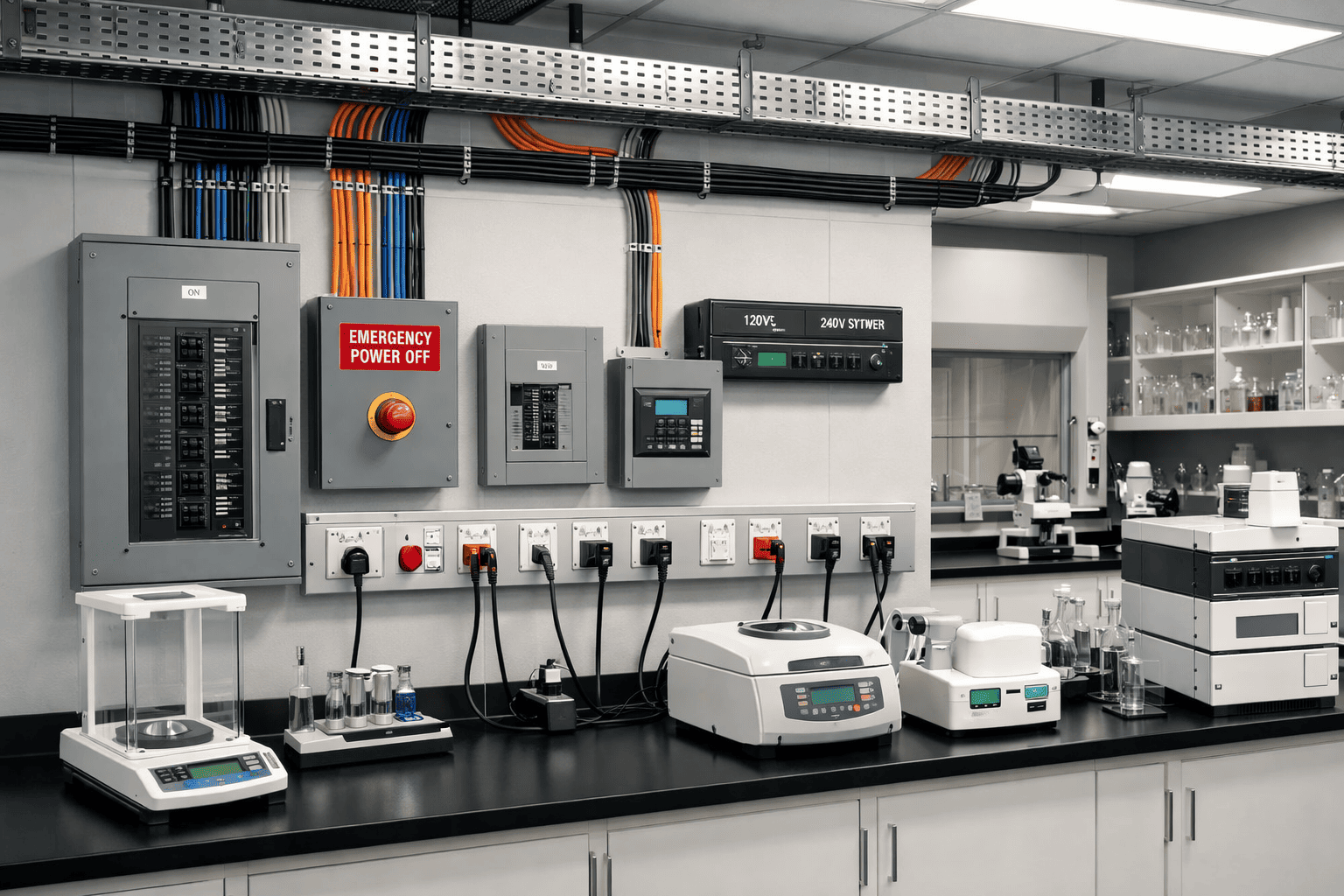
Designing a modern laboratory is a highly specialized process that goes far beyond architecture and interior aesthetics. At the heart of every high-performance laboratory lies a robust system of power distribution, utilities, and safety controls. Electrical & Utility Planning for Modern Laboratories is a critical discipline that ensures uninterrupted research, accurate results, compliance with regulations, and long-term operational efficiency.
Laboratories today support advanced equipment such as fume hoods, biosafety cabinets, analytical instruments, HVAC systems, and data servers. Each of these systems has unique power, water, gas, and exhaust requirements. Poor planning can lead to frequent downtime, safety hazards, equipment damage, and costly retrofits. Therefore, utilities must be designed with precision, scalability, and future expansion in mind.
Understanding Laboratory Electrical Requirements
Electrical planning for laboratories is fundamentally different from standard commercial buildings. Laboratories demand higher power loads, redundant systems, and precise grounding. Equipment such as centrifuges, spectrometers, autoclaves, and cold storage units require dedicated circuits and stable voltage to function correctly.
Power distribution must be segmented into normal power, emergency power, and uninterruptible power supply (UPS) systems. Emergency power supports life safety systems and essential equipment during outages, while UPS systems protect sensitive instruments from voltage fluctuations and data loss. Electrical & Utility Planning for Modern Laboratories ensures that all these layers are coordinated effectively.
Another important consideration is electrical zoning. Different laboratory zones may require different voltage levels, phase configurations, and load capacities. Designing these zones early prevents overloading and improves safety compliance.
Role of Utilities in Laboratory Infrastructure
Laboratories rely on a wide range of utilities beyond electricity. These include purified water, compressed air, vacuum systems, specialty gases, steam, drainage, and exhaust systems. Effective Utilities & infrastructure planning ensures that each utility is delivered at the right pressure, purity, and flow rate without interfering with other systems.
Water systems may include potable water, deionized water, reverse osmosis systems, and chilled water lines. Gas utilities often involve nitrogen, oxygen, carbon dioxide, hydrogen, and other specialty gases that must be stored and distributed safely. Each gas line requires proper labeling, leak detection, and isolation valves.
Drainage systems must handle chemical waste safely, often requiring neutralization systems before disposal. Exhaust and ventilation systems are equally important to maintain air quality, control contamination, and protect laboratory personnel.
Safety and Compliance Considerations
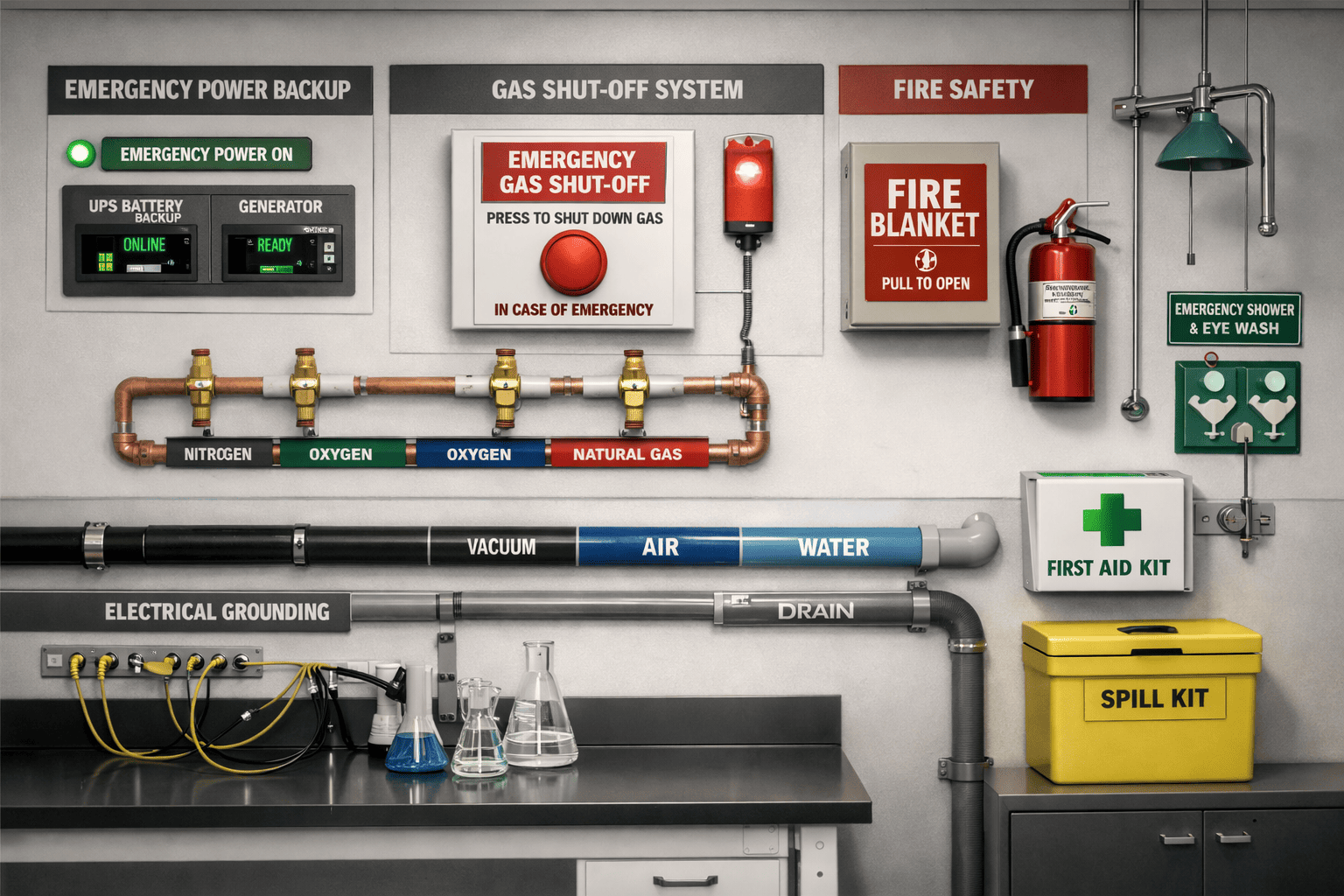
Safety is non-negotiable in laboratory design. Electrical and utility systems must comply with national and international standards such as IEC, NFPA, ISO, and local building codes. Electrical & Utility Planning for Modern Laboratories incorporates fire protection systems, emergency shut-off valves, grounding and bonding, and explosion-proof installations where required.
Fume hoods and biosafety cabinets must be interlocked with exhaust systems to prevent unsafe operation. Emergency power must support critical ventilation and safety equipment during failures. Clearly marked emergency shut-offs for gas and electricity allow rapid response during accidents.
Compliance is not a one-time activity. Well-planned systems allow for easy inspection, testing, and maintenance, ensuring continued adherence to evolving regulations.
Flexibility and Future-Ready Design
Modern laboratories are dynamic environments where research needs change frequently. Instruments are upgraded, layouts are modified, and new technologies are introduced. Strong Utilities & infrastructure planning emphasizes modularity and flexibility.
Overhead service carriers, service spines, and accessible utility corridors allow utilities to be reconfigured without major construction. Spare electrical capacity, additional conduit pathways, and extra utility ports enable future expansion at minimal cost.
Designing for scalability reduces long-term expenses and prevents operational disruptions. A future-ready laboratory can adapt to new research demands without compromising safety or efficiency.
Energy Efficiency and Sustainability
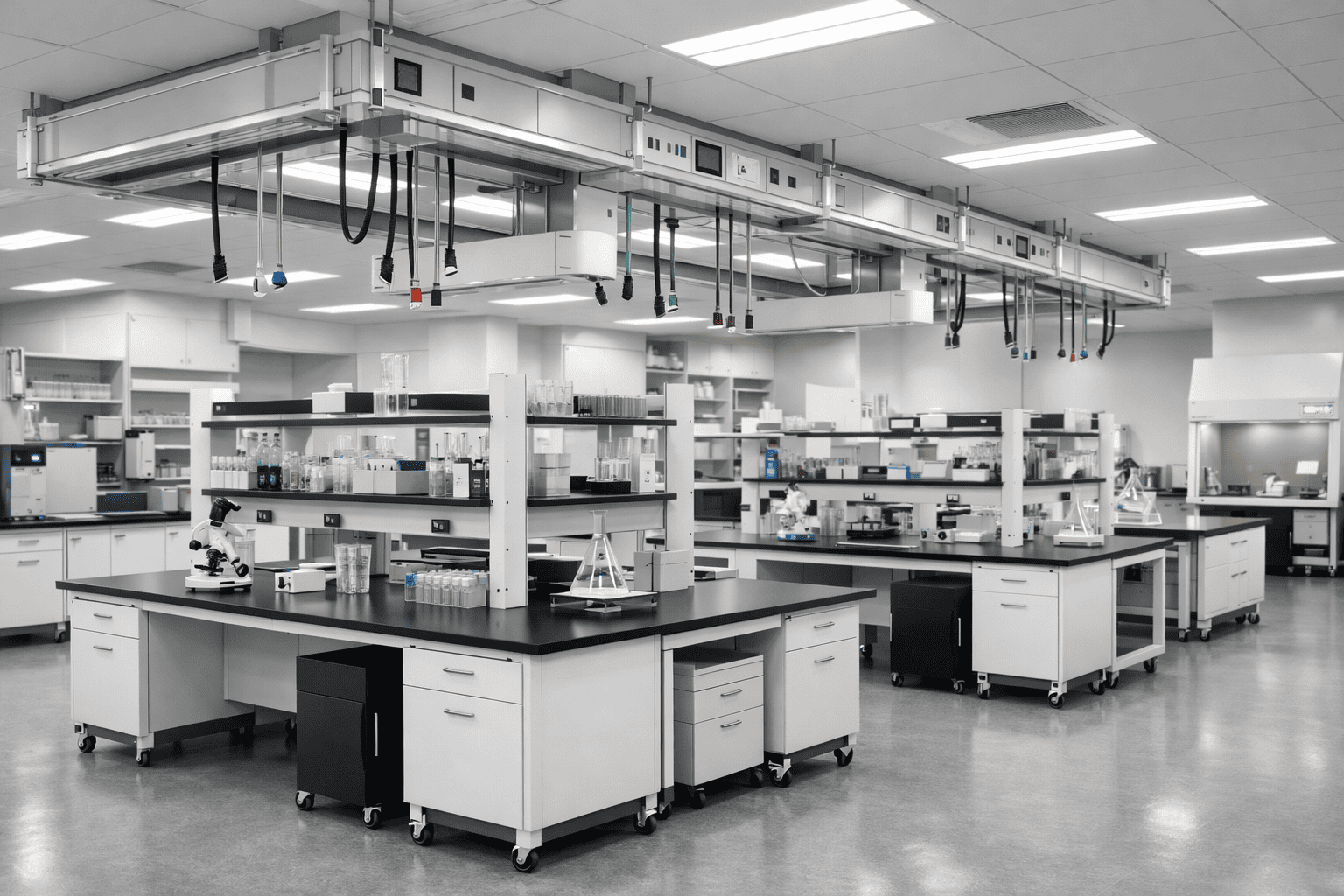
Energy consumption in laboratories is significantly higher than in standard buildings due to continuous equipment operation and ventilation requirements. Intelligent Utilities & infrastructure planning focuses on reducing energy waste while maintaining performance.
Energy-efficient lighting, variable frequency drives (VFDs), energy recovery systems, and smart building management systems (BMS) can dramatically lower operational costs. Load monitoring allows facility managers to optimize energy usage and detect inefficiencies early.
Sustainable laboratory design also includes water conservation, heat recovery from exhaust air, and efficient chilled water systems. These measures not only reduce costs but also support environmental responsibility and green building certifications.
Integration with Laboratory Equipment
Successful laboratory projects require close coordination between utility planning and equipment specifications. Each piece of equipment has defined requirements for power, cooling, ventilation, and services. Electrical & Utility Planning for Modern Laboratories aligns these requirements with the building infrastructure to avoid mismatches.
Early collaboration with equipment vendors helps determine exact loads, connection points, and service clearances. This reduces installation errors, commissioning delays, and costly redesigns. Integrated planning ensures smooth workflow and optimal equipment performance.
Maintenance and Operational Reliability
A laboratory’s performance depends on the reliability of its utilities. Poorly designed systems increase maintenance complexity and downtime. Clear labeling, accessible service points, and centralized monitoring systems improve operational efficiency.
Preventive maintenance schedules can be supported through smart sensors and digital monitoring tools. This proactive approach helps detect issues before they escalate, protecting both equipment and research outcomes.
Conclusion
Modern laboratories demand precision, safety, and adaptability at every level of design. Electrical systems and utilities form the backbone of these environments, directly influencing productivity, compliance, and long-term success. Through thoughtful Utilities & infrastructure planning, laboratories can achieve seamless integration of power, water, gas, and ventilation systems.
Investing in professional Electrical & Utility Planning for Modern Laboratories is not just about meeting today’s requirements—it is about building resilient, efficient, and future-ready research spaces that support innovation for years to come.



Leave a Reply